



Para quién es
- Birders chasing Caatinga endemics
- Nature photographers (strong light, clean backgrounds)
- Travelers who want to combine coast and interior
- Families on low-impact guided outings
La Mata Atlántica, la Caatinga y los humedales costeros se encuentran a pocas horas en coche, con una diversidad de aves desproporcionada al tamaño del estado.
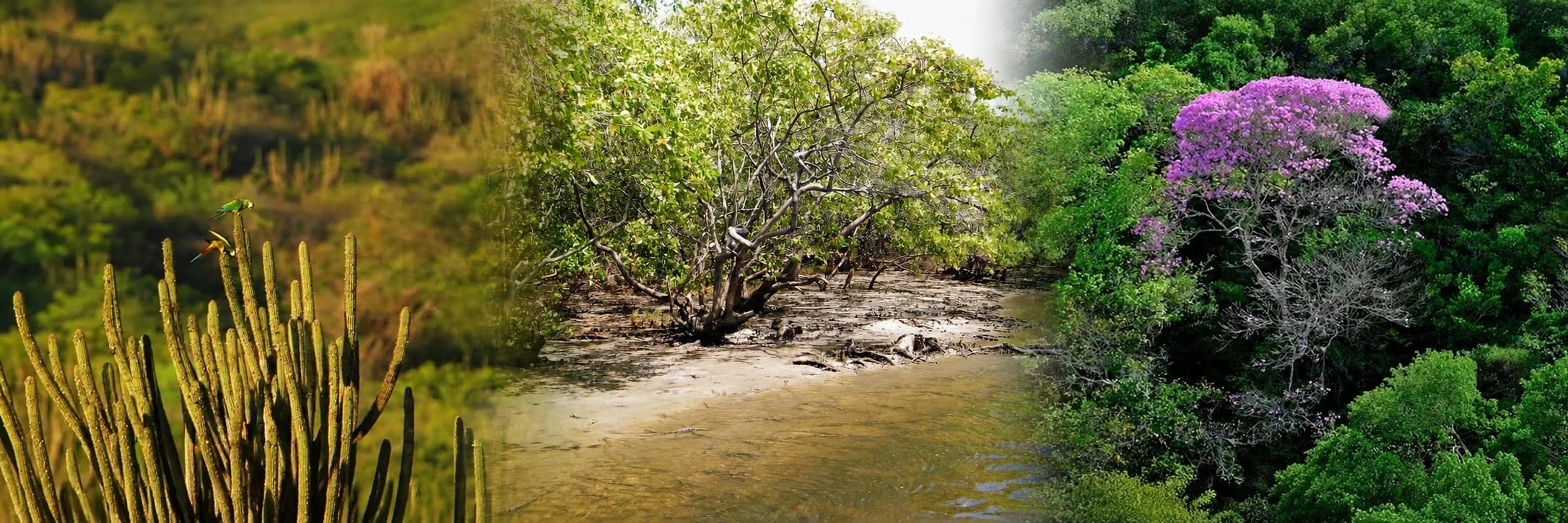
Few places on Earth bring together three such different biomes within a few hours’ drive. In Rio Grande do Norte the Atlantic Forest of the southern coast, the Caatinga of the interior and the coastal wetlands — estuaries, salt pans and mangroves — create a bird diversity out of all proportion to the size of the state.
The Caatinga is the only exclusively Brazilian biome and holds endemic species found in no other country. The best window runs from the end of the rainy season onward (March to July), when the interior turns green and breeding activity peaks. The salt pans of Galinhos and Macau concentrate shorebirds and migrants; the area around Pico do Cabugi and the Apodi region hold the Caatinga endemics.
 Endémica
 Endémica
 Endémica
 Endémica
 Endémica
 Endémica
Serra de Santana · Sertão do Seridó
Foto: Antonio Arnaiz-Villena, Valentin Ruiz-del-Valle ↗
 Endémica
 Endémica
 Endémica
 Endémica
 Endémica
 Endémica
 Endémica
Mata Estrela (Baía Formosa) · Serra de Santana
Foto: GIANNIZZZERO at English Wikipedia ↗
 Endémica
 Endémica


Dunas de Genipabu · Chapada do Apodi
Foto: Wagner Machado Carlos Lemes from Goiânia, Brazil ↗

Pico do Cabugi · Mata Estrela (Baía Formosa)
Foto: iNaturalist user: carnifex ↗


Mata Estrela (Baía Formosa) · Lagoa do Bonfim
Foto: Félix Uribe from Rionegro, Antioquia, Colombia ↗
Dunas espectaculares, paseos en buggy y lagunas, a solo 25 km de Natal.
Un pueblo aislado y prístino, sin coches, accesible solo en barco.
Municipio del oeste potiguar donde se encuentra el Lajedo de Soledade, afloramiento calcáreo del Cretácico con fósiles de megafauna del Pleistoceno.
Cuello volcánico extinto de 590 m cerca de Lajes/Angicos. Único vulcán fósil accesible del nordeste brasileño.
Pronto habrá guías locales certificados. Esta página los listará con sus idiomas y especialidades — sin registro, sin formularios.
Combina las salinas, el bosque seco y la costa en una ruta que sigue la luz y las mareas.