



Pour qui
- Birders chasing Caatinga endemics
- Nature photographers (strong light, clean backgrounds)
- Travelers who want to combine coast and interior
- Families on low-impact guided outings
Forêt atlantique, Caatinga et zones humides côtières se rencontrent à quelques heures de route, pour une diversité d'oiseaux sans commune mesure avec la taille de l'État.
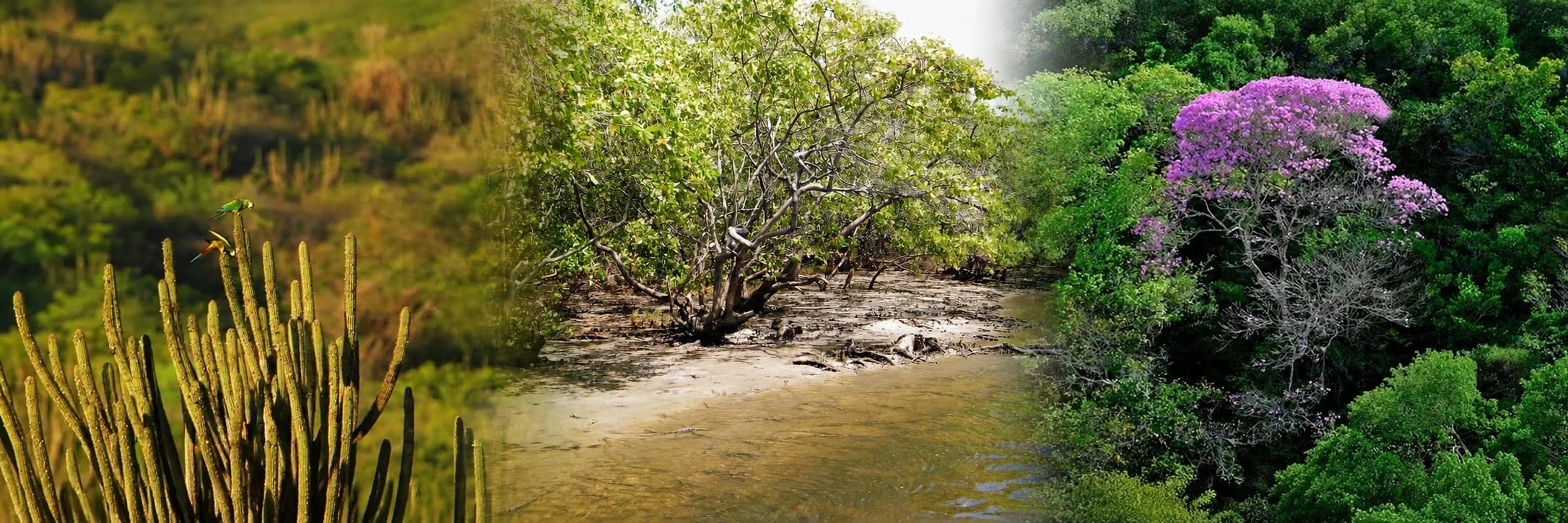
Few places on Earth bring together three such different biomes within a few hours’ drive. In Rio Grande do Norte the Atlantic Forest of the southern coast, the Caatinga of the interior and the coastal wetlands — estuaries, salt pans and mangroves — create a bird diversity out of all proportion to the size of the state.
The Caatinga is the only exclusively Brazilian biome and holds endemic species found in no other country. The best window runs from the end of the rainy season onward (March to July), when the interior turns green and breeding activity peaks. The salt pans of Galinhos and Macau concentrate shorebirds and migrants; the area around Pico do Cabugi and the Apodi region hold the Caatinga endemics.
 Endémique
 Endémique
 Endémique
 Endémique
 Endémique
 Endémique
Serra de Santana · Sertão do Seridó
Photo: Antonio Arnaiz-Villena, Valentin Ruiz-del-Valle ↗
 Endémique
 Endémique
 Endémique
 Endémique
 Endémique
 Endémique
 Endémique
Mata Estrela (Baía Formosa) · Serra de Santana
Photo: GIANNIZZZERO at English Wikipedia ↗
 Endémique
 Endémique


Dunas de Genipabu · Chapada do Apodi
Photo: Wagner Machado Carlos Lemes from Goiânia, Brazil ↗

Pico do Cabugi · Mata Estrela (Baía Formosa)
Photo: iNaturalist user: carnifex ↗

Dunes spectaculaires, balades en buggy et lagunes, à seulement 25 km de Natal.
Un village isolé et préservé, sans voitures, accessible uniquement en bateau.
Commune de l'ouest du RN où se trouve le Lajedo de Soledade, affleurement calcaire du Crétacé renfermant des fossiles de mégafaune du Pléistocène.
Cou volcanique éteint culminant à 590 m près de Lajes/Angicos. Seul vestige volcanique accessible du Nord-Est brésilien.
Des guides locaux certifiés arrivent bientôt. Cette page les présentera avec leurs langues et spécialités — sans inscription, sans formulaire.
Reliez les salines, la forêt sèche et la côte en un itinéraire qui suit la lumière et les marées.