





Voor wie
- Birders chasing Caatinga endemics
- Nature photographers (strong light, clean backgrounds)
- Travelers who want to combine coast and interior
- Families on low-impact guided outings
Atlantisch bos, Caatinga-droogbos en kustmoerassen komen binnen enkele uren rijden samen, met een vogelrijkdom die niet in verhouding staat tot de omvang van de staat.
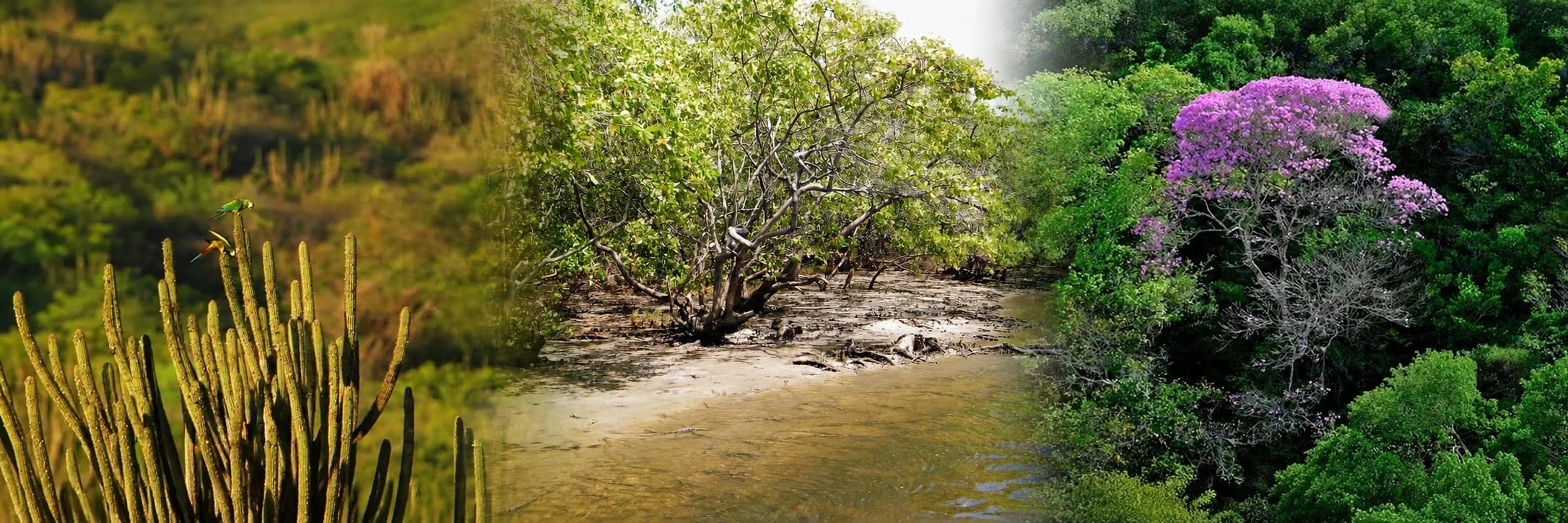
Few places on Earth bring together three such different biomes within a few hours’ drive. In Rio Grande do Norte the Atlantic Forest of the southern coast, the Caatinga of the interior and the coastal wetlands — estuaries, salt pans and mangroves — create a bird diversity out of all proportion to the size of the state.
The Caatinga is the only exclusively Brazilian biome and holds endemic species found in no other country. The best window runs from the end of the rainy season onward (March to July), when the interior turns green and breeding activity peaks. The salt pans of Galinhos and Macau concentrate shorebirds and migrants; the area around Pico do Cabugi and the Apodi region hold the Caatinga endemics.
Spectaculaire duinen, buggyritten en lagunes, op slechts 25 km van Natal.
Een afgelegen, ongerept dorp zonder auto’s, alleen per boot bereikbaar.
Gemeente in het westen van RN met het Lajedo de Soledade, een kalksteenontsluiting uit het Krijt met megafauna-fossielen uit het Pleistoceen.
Uitgedoofde vulkaanpijp van 590 m bij Lajes/Angicos. De enige toegankelijke vulkaanrest in Noordoost-Brazilië.
Gecertificeerde lokale gidsen komen binnenkort. Deze pagina toont ze met hun talen en specialiteiten — geen aanmelding, geen formulieren.
Rijg de zoutpannen, het droogbos en de kust aaneen tot een route die het licht en de getijden volgt.