



Für wen geeignet
- Birders chasing Caatinga endemics
- Nature photographers (strong light, clean backgrounds)
- Travelers who want to combine coast and interior
- Families on low-impact guided outings
Atlantischer Regenwald, Caatinga-Trockenwald und Küstenfeuchtgebiete treffen innerhalb weniger Autostunden aufeinander — eine Vogelvielfalt, die in keinem Verhältnis zur Größe des Bundesstaats steht.

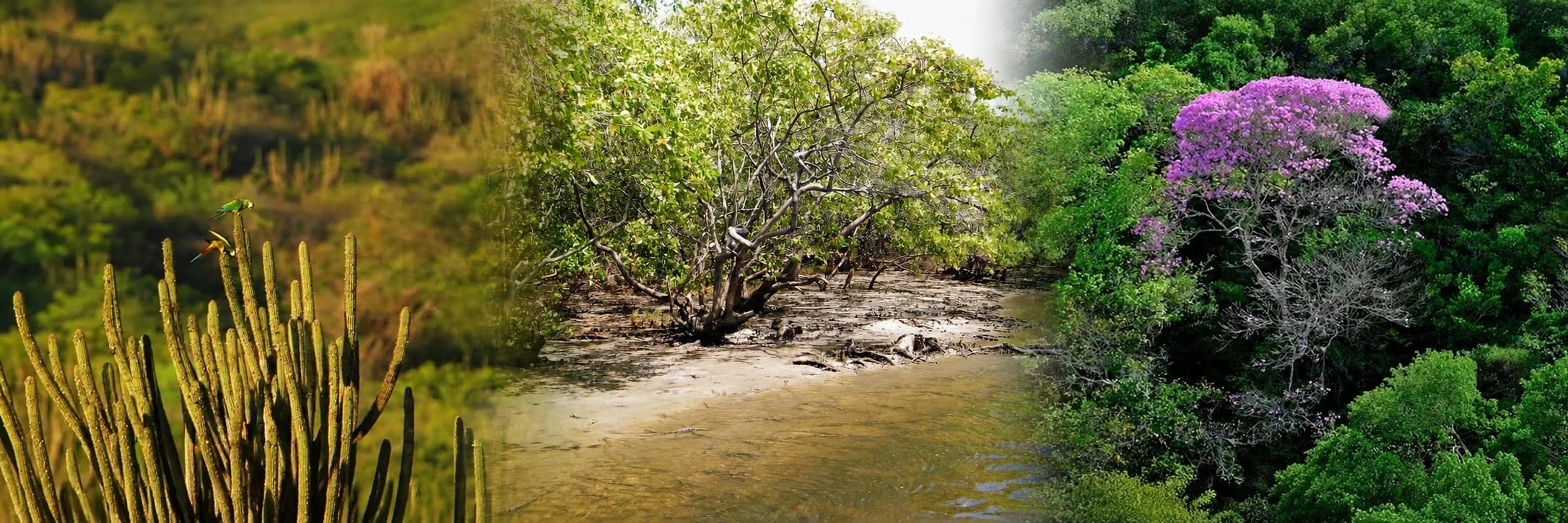
Few places on Earth bring together three such different biomes within a few hours’ drive. In Rio Grande do Norte the Atlantic Forest of the southern coast, the Caatinga of the interior and the coastal wetlands — estuaries, salt pans and mangroves — create a bird diversity out of all proportion to the size of the state.
The Caatinga is the only exclusively Brazilian biome and holds endemic species found in no other country. The best window runs from the end of the rainy season onward (March to July), when the interior turns green and breeding activity peaks. The salt pans of Galinhos and Macau concentrate shorebirds and migrants; the area around Pico do Cabugi and the Apodi region hold the Caatinga endemics.
 Endemisch
Mata Estrela (Baía Formosa) · Serra de Santana
Foto: GIANNIZZZERO at English Wikipedia ↗


Dunas de Genipabu · Chapada do Apodi
Foto: Wagner Machado Carlos Lemes from Goiânia, Brazil ↗


Mata Estrela (Baía Formosa) · Lagoa do Bonfim
Foto: Félix Uribe from Rionegro, Antioquia, Colombia ↗
Spektakuläre Dünen, Buggy-Touren und Lagunen, nur 25 km von Natal entfernt.
Ein abgeschiedenes, unberührtes Dorf ohne Autos, nur per Boot erreichbar.
Gemeinde im Westen des RN mit dem Lajedo de Soledade, einem Kalksteinaufschluss aus der Kreidezeit mit Megafauna-Fossilien aus dem Pleistozän.
590 m hoher erloschener Vulkanschlot bei Lajes/Angicos. Das einzige zugängliche Vulkan-Relikt im Nordosten Brasiliens.
Zertifizierte lokale Guides folgen in Kürze. Diese Seite listet sie mit Sprachen und Spezialgebieten — ohne Anmeldung, ohne Formulare.
Verbinden Sie die Salzfelder, den Trockenwald und die Küste zu einer Route, die dem Licht und den Gezeiten folgt.