



Zum Hauptinhalt springen
Vogelbeobachtung

Vogelbeobachtung in Rio Grande do Norte

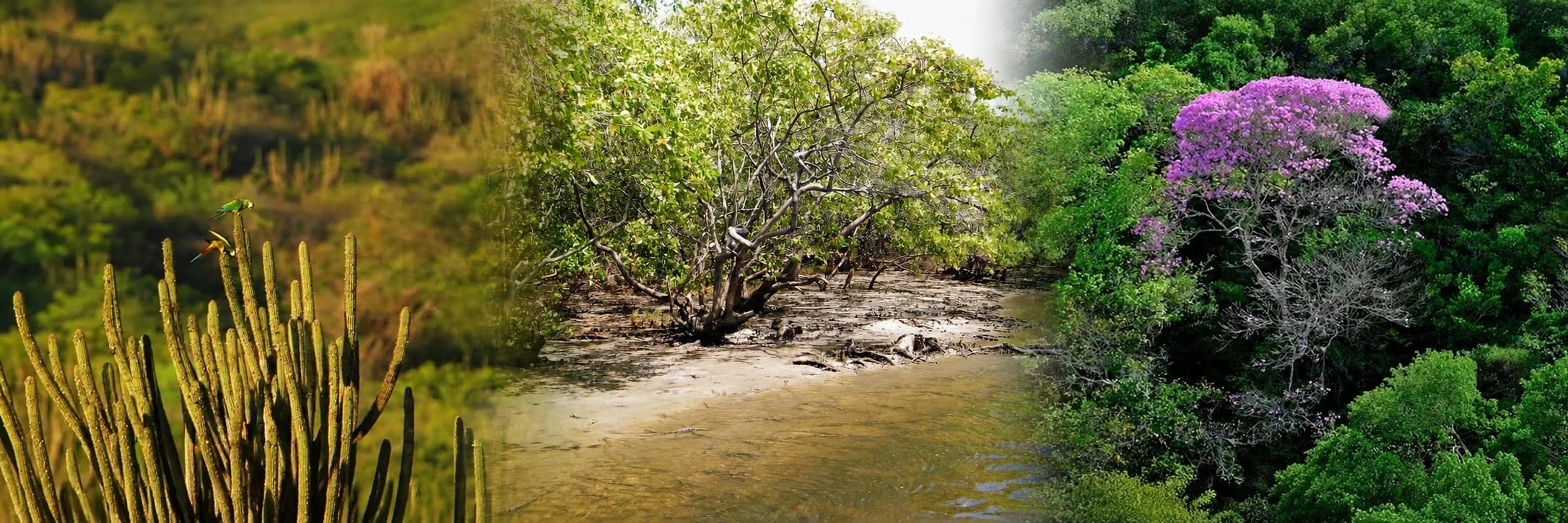
Atlantischer Regenwald, Caatinga-Trockenwald und Küstenfeuchtgebiete treffen innerhalb weniger Autostunden aufeinander — eine Vogelvielfalt, die in keinem Verhältnis zur Größe des Bundesstaats steht.

386in RN erfasste ArtenQuelle: eBird.org
Vogelbeobachtung in Rio Grande do Norte
Vogelbeobachtung

Wo drei Biome aufeinandertreffen

Few places on Earth bring together three such different biomes within a few hours’ drive. In Rio Grande do Norte the Atlantic Forest of the southern coast, the Caatinga of the interior and the coastal wetlands — estuaries, salt pans and mangroves — create a bird diversity out of all proportion to the size of the state.

The Caatinga is the only exclusively Brazilian biome and holds endemic species found in no other country. The best window runs from the end of the rainy season onward (March to July), when the interior turns green and breeding activity peaks. The salt pans of Galinhos and Macau concentrate shorebirds and migrants; the area around Pico do Cabugi and the Apodi region hold the Caatinga endemics.

Vogelbeobachtung
  • Eudocimus ruber

    Eudocimus ruber

    Galinhos · Macau

    Foto: Charles J. Sharp · CC BY-SA 4.0 · Wikimedia Commons

    Audio: David Darrell-Lambert · CC BY-NC-SA 4.0 · xeno-canto

  • Aratinga jandayaEndemisch

    Aratinga jandaya

    Mata Estrela (Baía Formosa) · Serra de Santana

    Foto: GIANNIZZZERO at English Wikipedia · Public domain · Wikimedia Commons

    Audio: JAYRSON ARAUJO DE OLIVEIRA · CC BY-NC-SA 4.0 · xeno-canto

  • Platalea ajaja

    Platalea ajaja

    Galinhos · Macau

    Foto: Frank Schulenburg · CC BY-SA 4.0 · Wikimedia Commons

    Audio: Paul Marvin · CC BY-NC-SA 4.0 · xeno-canto

  • Fregata magnificens

    Fregata magnificens

    Galinhos · Areia Branca

    Foto: Charles J. Sharp · CC BY-SA 4.0 · Wikimedia Commons

    Audio: Leonardo Ordóñez-Delgado · CC BY-NC-SA 4.0 · xeno-canto

  • Sula leucogaster

    Sula leucogaster

    Litoral norte · Galinhos

    Foto: Charles J. Sharp · CC BY-SA 4.0 · Wikimedia Commons

    Audio: Reyt Sylvain · CC BY-NC-SA 4.0 · xeno-canto

  • Calidris pusilla

    Calidris pusilla

    Salinas de Galinhos · Macau

    Foto: Rhododendrites · CC BY-SA 4.0 · Wikimedia Commons

    Audio: AUDEVARD Aurélien · CC BY-NC-SA 4.0 · xeno-canto

  • Himantopus melanurus

    Himantopus melanurus

    Salinas de Galinhos · Lagoa do Bonfim

    Foto: Frank Schulenburg · CC BY-SA 3.0 · Wikimedia Commons

    Audio: Douglas Meyer · CC BY-NC-SA 4.0 · xeno-canto

  • Caracara plancus

    Caracara plancus

    Pico do Cabugi · Litoral

    Foto: Charles J. Sharp · CC BY-SA 4.0 · Wikimedia Commons

    Audio: JAYRSON ARAUJO DE OLIVEIRA · CC BY-NC-SA 4.0 · xeno-canto

  • Athene cunicularia

    Athene cunicularia

    Dunas de Genipabu · Chapada do Apodi

    Foto: Wagner Machado Carlos Lemes from Goiânia, Brazil · CC BY 2.0 · Wikimedia Commons

    Audio: Isain Contreras Rodríguez · CC BY-NC-SA 4.0 · xeno-canto

  • Eupetomena macroura

    Eupetomena macroura

    Lagoa do Bonfim · Pipa

    Foto: Dario Sanches from São Paulo, Brazil · CC BY-SA 2.0 · Wikimedia Commons

    Audio: JAYRSON ARAUJO DE OLIVEIRA · CC BY-NC-SA 4.0 · xeno-canto

Vogelbeobachtung

Ist das etwas für Sie?

Für wen geeignet

  • Birders chasing Caatinga endemics
  • Nature photographers (strong light, clean backgrounds)
  • Travelers who want to combine coast and interior
  • Families on low-impact guided outings

Was mitnehmen

  • Binoculars 8×42 and a telephoto lens
  • Neutral-colour, long-sleeve clothing
  • Insect repellent and sunscreen
  • A local guide — essential for the Caatinga endemics
Vogelbeobachtung

Beste Monate

  • Jan
  • Feb
  • Mär
  • Apr
  • Mai
  • Jun
  • Jul
  • Aug
  • Sep
  • Okt
  • Nov
  • Dez
Vogelbeobachtung

Beobachtungs-Hotspots

Vogelbeobachtung

Zertifizierte Guides

Zertifizierte lokale Guides folgen in Kürze. Diese Seite listet sie mit Sprachen und Spezialgebieten — ohne Anmeldung, ohne Formulare.

Vogelbeobachtung

Planen Sie Ihre Beobachtungstage

Verbinden Sie die Salzfelder, den Trockenwald und die Küste zu einer Route, die dem Licht und den Gezeiten folgt.