


Who it's for
- Birders chasing Caatinga endemics
- Nature photographers (strong light, clean backgrounds)
- Travelers who want to combine coast and interior
- Families on low-impact guided outings
Atlantic Forest, Caatinga dry forest and coastal wetlands meet within a few hours' drive, for a concentration of birdlife out of all proportion to the size of the state.
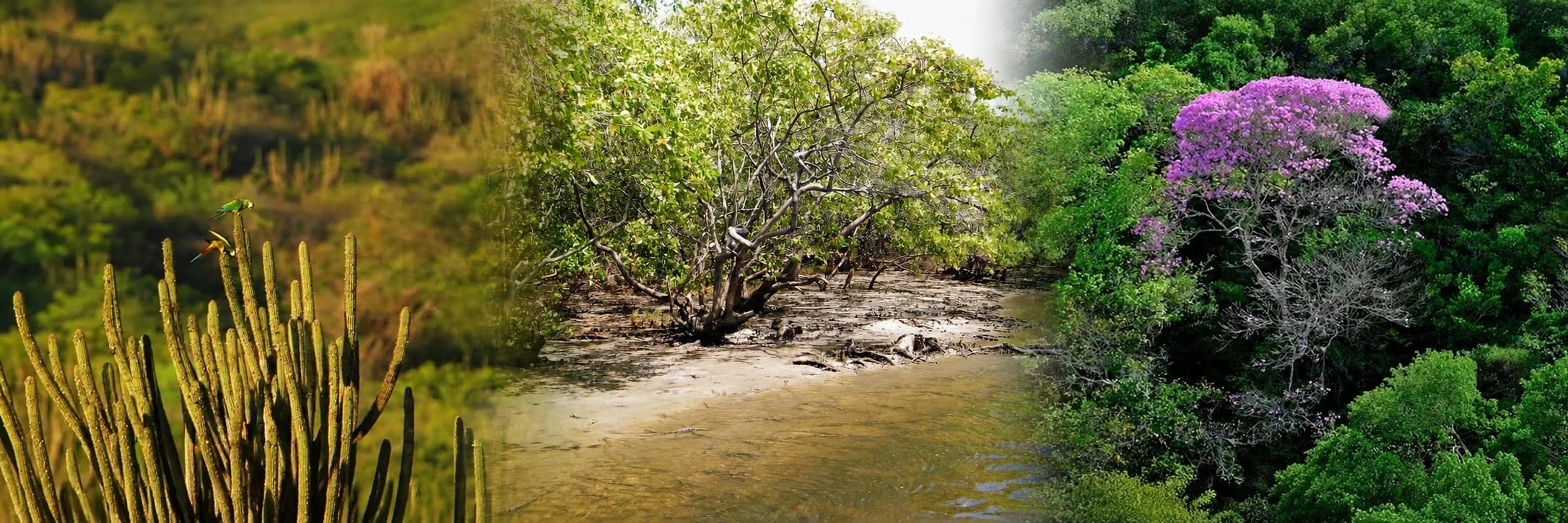
Few places on Earth bring together three such different biomes within a few hours’ drive. In Rio Grande do Norte the Atlantic Forest of the southern coast, the Caatinga of the interior and the coastal wetlands — estuaries, salt pans and mangroves — create a bird diversity out of all proportion to the size of the state.
The Caatinga is the only exclusively Brazilian biome and holds endemic species found in no other country. The best window runs from the end of the rainy season onward (March to July), when the interior turns green and breeding activity peaks. The salt pans of Galinhos and Macau concentrate shorebirds and migrants; the area around Pico do Cabugi and the Apodi region hold the Caatinga endemics.
 Endemic
Aratinga jandaya
Mata Estrela (Baía Formosa) · Serra de Santana
Photo: GIANNIZZZERO at English Wikipedia ↗


Athene cunicularia
Dunas de Genipabu · Chapada do Apodi
Photo: Wagner Machado Carlos Lemes from Goiânia, Brazil ↗

Eupetomena macroura
Lagoa do Bonfim · Pipa
Photo: Dario Sanches from São Paulo, Brazil ↗

Galbula ruficauda
Mata Estrela (Baía Formosa) · Pipa
Photo: Jairmoreirafotografia ↗

Tangara cayana
Mata Estrela (Baía Formosa) · Lagoa do Bonfim
Photo: Félix Uribe from Rionegro, Antioquia, Colombia ↗
Spectacular dunes, buggy rides and lagoons, just 25 km from Natal.
An isolated pristine village, no cars, reachable only by boat.
Western RN municipality home to the Lajedo de Soledade, a Cretaceous limestone outcrop with Pleistocene megafauna fossils.
Extinct volcanic neck rising 590 m near Lajes/Angicos. The only accessible volcanic relic in NE Brazil.
Certified local guides are coming soon. This page will list them with their languages and specialties — no sign-up, no forms.
Thread the salt pans, the dry forest and the coast into a route that follows the light and the tides.